





As a world leader in thermal oxidizer systems, industrial air heaters, and specialty low NOx burners, PCC provides the technical expertise to optimize your facility at every stage. We offer comprehensive Environmental Engineering and Consulting Services focused on energy optimization, emissions reduction, and equipment capacity upgrades. Whether you require initial FEED studies or complex equipment retrofits and de-bottlenecking, our team delivers integrated solutions for downstream air pollution control and heat recovery systems.
Comprehensive APC Engineering Studies & System Optimization
Navigating the complex landscape of air pollution control hardware selection can be overwhelming, given the multitude of equipment vendors and technologies available. Determining the most suitable equipment to meet permit requirements is crucial, along with engaging with various suppliers to ensure all needs are met. The intricate design, potential need for multiple equipment sets, and integration requirements' necessitate a thorough evaluation of project scope.
In many cases, air pollution control needs require a combination of diverse designs to achieve effective solutions. For instance, a combination of devices like thermal oxidizers, quenchers, venturi scrubbers, precipitators, and acid gas scrubbers may be needed to address different aspects of the air pollution control need. The flexibility to combine design creativity offers endless possibilities to tailor solutions for specific applications. Embracing innovation is key in finding optimal configurations.
Engaging in an Engineering study, before a final design specification is developed, is a proactive strategy that enables the end user to develop superior solutions, mitigate risks, and optimize outcomes specific to their APC system needs. Understanding these key components is essential for making informed decision and optimizing the effectiveness of the air pollution control system.
Some of the critical parameters that play a major role in the final system design and performance expectations are:
1. Contaminant characteristics (i.e., physical and chemical properties, concentration, particulate shape and size distribution, chemical reactivity, corrosivity, abrasiveness, toxicity, etc.)
2. Gas stream characteristics (i.e., volume, flow rate, temperature, pressure, humidity, composition, viscosity, density, reactivity, combustibility, corrosivity, toxicity, etc.)
3. Design and performance characteristics of the particular control system, i.e., size and weight, fractional efficiency curves (in the case of particulates), mass transfer and/or contaminant destruction capability (in the case of gases or vapors), pressure drop, reliability and dependability, turndown capability, power requirements, utility requirements, temperature limitations, maintenance requirements, flexibility with regard to complying with more stringent air pollution regulations, etc.
Many times, these critical parameters are unknown or assumed to be accurate. Operating cases are another area that can be very subjective and clearly can impact on the overall design of the APC system.
An Engineering study allows the end user and the equipment provider the ability to validate the parameters, confirm the accuracy of the various operating cases and ultimately design a system that meets all the performance criteria at an acceptable price.
Engineering studies incorporate detailed planning, thorough review of the design requirements, and optimal equipment design based on a proactive overview of the end user's performance needs. This approach yields a variety of advantages, such as:
Enhanced accuracy
Decreased development time
Design efficiency
Seamless collaboration
Enhanced accuracy
Design efficiency
Cost-effectiveness
Product quality
Some of the critical parameters that play a major role in the final system design and performance expectations are:
| Action | Benefit |
|---|---|
| Ensure a clear project scope. | The project scope should be well thought out and identified at the project's planning or inception stage. Failure to define the scope early on often leads to scope creep and unnecessary increases to project cost. |
| Provide clear project specifications. | Project specifications should clearly describe the work elements, materials required, implementation, monitoring and evaluation, delivery of contract goods and services, and payment method. |
| Positive impact on delivery | By performing engineering before the actual equipment order is placed, the total time from receipt of the OE purchase order to delivery is reduced due to the elimination of the system engineering, approvals and finalization of design. This has been completed allowing for the immediate "release to purchase" facilitating the final delivery of the equipment. |
| System "Full Integration" | Full accounting and coordination verifying system compatibility, design criteria validation and interface acceptability for each equipment set contained within the APC Solution. |
| System design/integration verification/documentation | Full confirmation of the process, design, technical documentation, specifications, and engineering scope of supply. Costing accuracy is also a key benefit of an engineering study. |
| Promote effective communication | Communicate! Effective communication includes being transparent, open and honest. |
Need Information? Tell us your request.
"*" indicates required fields
Upfront Environmental Engineering Consulting
Using ASPEN modeling software, Computational Fluid Dynamic (CFD) analysis, and 3D solid models as needed, PCC will evaluate and design a solution for each application. Along with specialized software, we employ our best tool of all: PCC engineers and Professional Engineers (P.E.), who hold degrees in various engineering disciplines.
Our professionals have many years of actual experience in the design and supply of pollution control equipment, for a wide variety of industries and a vast range of waste streams and emission problems. These upfront environmental engineering and consulting service capabilities set us apart from other pollution control equipment suppliers.
What is a typical Engineering Study?
PCC will custom design an Engineering Study to suit your specific needs.
A typical Engineering Study though might include some or all of these elements:

SITE VISITATION AND SURVEY
An initial on-site assessment to review current and proposed operating data.

ENGINEERING ANALYSIS
Expert preparation of energy and mass balance calculations tailored to your facility.

SYSTEM EVALUATION

FINAL DELIVERABLES
A detailed written report featuring system variation implications, recommended control modifications, and a firm budget proposal for project execution.
CASE HISTORY
(PCC Project 3739)
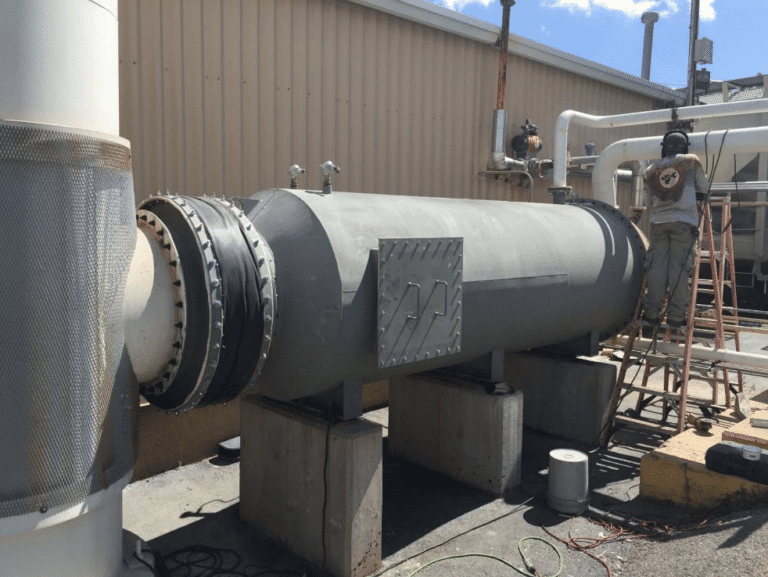
This project was a retrofit of an existing PCC project. The end user had been experiencing hot spots, and an eventual burn through on the existing combustion chamber. PCC worked with the end user to resupply a new combustion chamber, coordinate the removal of the existing chamber, install and commission the new chamber, all within a week turnaround.
Common Questions: Engineering Studies & Retrofits
An engineering study is a nominal up-front investment that guarantees the full optimization and performance of your final equipment set. By validating designs early, you avoid costly design changes, fabrication delays, and performance issues later in the project.
What our customers are saying...
"PCC... The best-kept secret in the industry."
— Rohm & Haas
"PCC works like a well-oiled machine."
— Louisiana Pigments Company
"We would not be where we are today without the engineering knowledge and efforts, quality of construction, professionalism, and cooperation of your first-class organization."
— Montauk Energy Capital
"PCC's commitment to safety and quality allow completion ahead of schedule, under budget, and safely."
—
"PCC's desire to deliver a quality product was apparent throughout all phases of our project, and PCC's overall gas combustion experience resulted in a robust and reliable operating unit."
—
"We are very pleased that it was commissioned five weeks earlier than the contract completion date."
—
"PCC was absolutely on time with delivery of our thermal oxidizer... I was quite impressed. All the units we bought from PCC run flawlessly, even after 10 years. We can't calculate a MTBF, because there have been no failures."
—