






ORC Waste Heat Recovery vs Waste Heat Recovery Boilers
Industrial facilities frequently evaluate waste heat recovery opportunities based primarily on exhaust temperature. While elevated exhaust temperatures may indicate recoverable energy potential, successful waste heat recovery projects require a much broader engineering evaluation. Heat source stability, process integration, operating schedules, contaminants, pressure-drop limitations, and the facility's actual energy demand all play critical roles in determining whether recovery is practical and economically viable.
The opportunity is significant. The U.S. Department of Energy estimates that 20 to 50 percent of the energy consumed in industrial processes is ultimately discharged as waste heat. Capturing even a portion of that energy can reduce purchased fuel and power, but only when the recovery method is matched correctly to the heat source and the plant's actual needs.
ORC Systems and Waste Heat Recovery Boilers Defined
Organic Rankine Cycle (ORC) systems and Waste Heat Recovery Boilers (WHRBs) are two common approaches used to recover industrial waste heat. Although both technologies are designed to improve energy efficiency and reduce operating costs, they serve fundamentally different purposes and must be evaluated accordingly.
What is an ORC System?
An ORC system converts thermal energy into electrical power by vaporizing an organic working fluid that drives an expander or turbine-generator assembly. The vapor is then condensed and pumped back through a closed loop to repeat the cycle. Because the organic fluid boils at a lower temperature than water, these systems are commonly applied to lower- and medium-temperature heat sources where conventional steam power generation may not be practical.
What is a Waste Heat Recovery Boiler?
A waste heat recovery boiler, by comparison, captures thermal energy and transfers it into a usable heating medium such as steam, hot water, thermal oil, or combustion air preheat. In many industrial applications, direct thermal recovery provides greater operational value than electrical generation because the recovered energy can be used immediately within the process or utility system, often by routing it to an existing load such as an industrial air heater.
Start With the Energy Sink Not the Equipment
The first step in evaluating any waste heat recovery project should not be selecting equipment, but rather identifying the facility's available energy, meaning how the recovered energy will actually be utilized.
Facilities with continuous steam demand, process heating requirements, thermal oil systems, or hot water consumption often benefit more from direct thermal recovery solutions. Conversely, facilities with limited thermal demand but stable excess heat may find ORC-based power generation more attractive, particularly when offsetting purchased electrical power is a priority.
Typical industrial heat sources suitable for evaluation include:
- Thermal oxidizer exhaust
- Furnace, kiln, and oven exhaust
- Engine and turbine exhaust
- Process heater flue gas
- Drying and curing operations
- Thermal oil systems and hot liquid loops
- High-temperature process exhaust streams
Not every hot stream is a practical recovery candidate. A high-temperature stream with limited flow, unstable operation, significant particulate loading, or corrosive contaminants may present substantial technical and maintenance challenges that reduce overall project viability.
ORC System vs Waste Heat Recovery Boiler: A Comparison
The two approaches are not competitors so much as answers to different facility needs. The comparison below summarizes where each typically fits.
| Factor | ORC System | Waste Heat Recovery Boiler |
|---|---|---|
| Primary Output | Electrical power | Steam, hot water, thermal oil, or preheated combustion air |
| Best-Fit Heat Grade | Lower to medium temperature | Medium to high temperature |
| Best-Fit Facility | Limited thermal demand but stable excess heat; high purchased-power cost | Existing steam, process-heat, or hot-water demand |
| Relative Complexity | Higher; closed working-fluid loop and power conversion | Lower; fewer conversion losses when a thermal sink exists |
| Watch Closely | Working-fluid selection, condensing conditions, load stability, electrical economics | Water treatment, steam integration, fouling, corrosion, pressure design |
The Screening Criteria That Determine Viability
Several key engineering factors determine whether waste heat recovery is practical, regardless of which technology is ultimately selected.
Temperature and Heat Quality
Higher-temperature streams generally support a wider range of recovery options, including steam generation and process heating. Lower-temperature streams may favor ORC systems or hot water recovery applications. However, temperature alone does not determine project value.
Mass Flow and Operating Hours
A low-flow stream may contain insufficient recoverable energy even at elevated temperatures. Similarly, intermittent or batch-operated processes may not justify the capital investment required for recovery equipment.
Contaminants and Fouling Potential
Particulate, condensable organics, acid gases, chlorides, sulfur compounds, and sticky carryover materials can significantly affect equipment design, reliability, and maintenance requirements. Dirty heat sources often require specialized materials, cleaning strategies, and bypass systems.
Pressure Drop Limitations
Adding recovery equipment into an exhaust path changes system hydraulics and draft conditions. This is particularly important for combustion systems and emissions-control equipment, where excessive pressure drop can negatively affect burner stability, destruction efficiency, or process reliability.
Recovered Energy Value
The recovered energy must serve a meaningful plant requirement. Steam without steam demand, or intermittent electrical generation from unstable heat sources, may not justify the complexity and operating cost of the recovery system.
ORC systems are frequently promoted for lower-temperature applications, often within the approximate range of 80 to 350°C. While this range provides useful context, it should not be viewed as an automatic qualification for a waste heat-to-power project. Stable operation, sufficient thermal mass flow, long operating hours, and favorable electrical economics are equally important to overall project success.
Types of Waste Heat Recovery Boilers
The term waste heat recovery boiler covers several distinct configurations. The right choice depends on gas-side conditions, steam pressure requirements, fouling risk, and maintenance access.
- Fire-tube waste heat boilers pass hot gas through tubes surrounded by water.
They are often simpler in layout, though gas-side fouling and cleaning access must be considered. - Water-tube waste heat boilers circulate water or steam through tubes exposed to the hot gas,
and are typically selected for higher-pressure or larger-duty applications. - Single- and multi-pressure systems generate steam at one or several pressure levels.
Multi-pressure designs recover more energy but add control and integration complexity. - Supplementary-fired systems add controlled combustion when recovered heat alone cannot meet the required steam duty,
which calls for careful burner, draft, fuel, and emissions design through integrated burners and combustors.
Where Waste Heat Recovery Pays Off
The most visible opportunities occur in energy-intensive industries. Cement, steel, and glass production generate large volumes of high-temperature exhaust from kilns, furnaces, and clinker coolers. Oil and gas operations, power generation, and engine- or turbine-driven facilities provide steady exhaust streams during operation. Chemical, petrochemical, food processing, and drying or curing operations are also frequent candidates when the heat source is stable and a useful sink exists.
Common waste heat recovery configurations across these industries include:
- Steam-generating waste heat boilers
- Hot water recovery systems
- Thermal fluid heating systems
- Combustion air preheat economizers
- Boiler feedwater preheat systems
- Integrated thermal and power-generation systems
Each recovery application must be engineered around the specific process stream and plant operating conditions. Material selection, tube geometry, cleaning access, controls integration, bypass arrangements, and maintenance accessibility often determine long-term reliability more than the basic recovery technology itself.
Integrating Recovery With Combustion and Emissions Systems
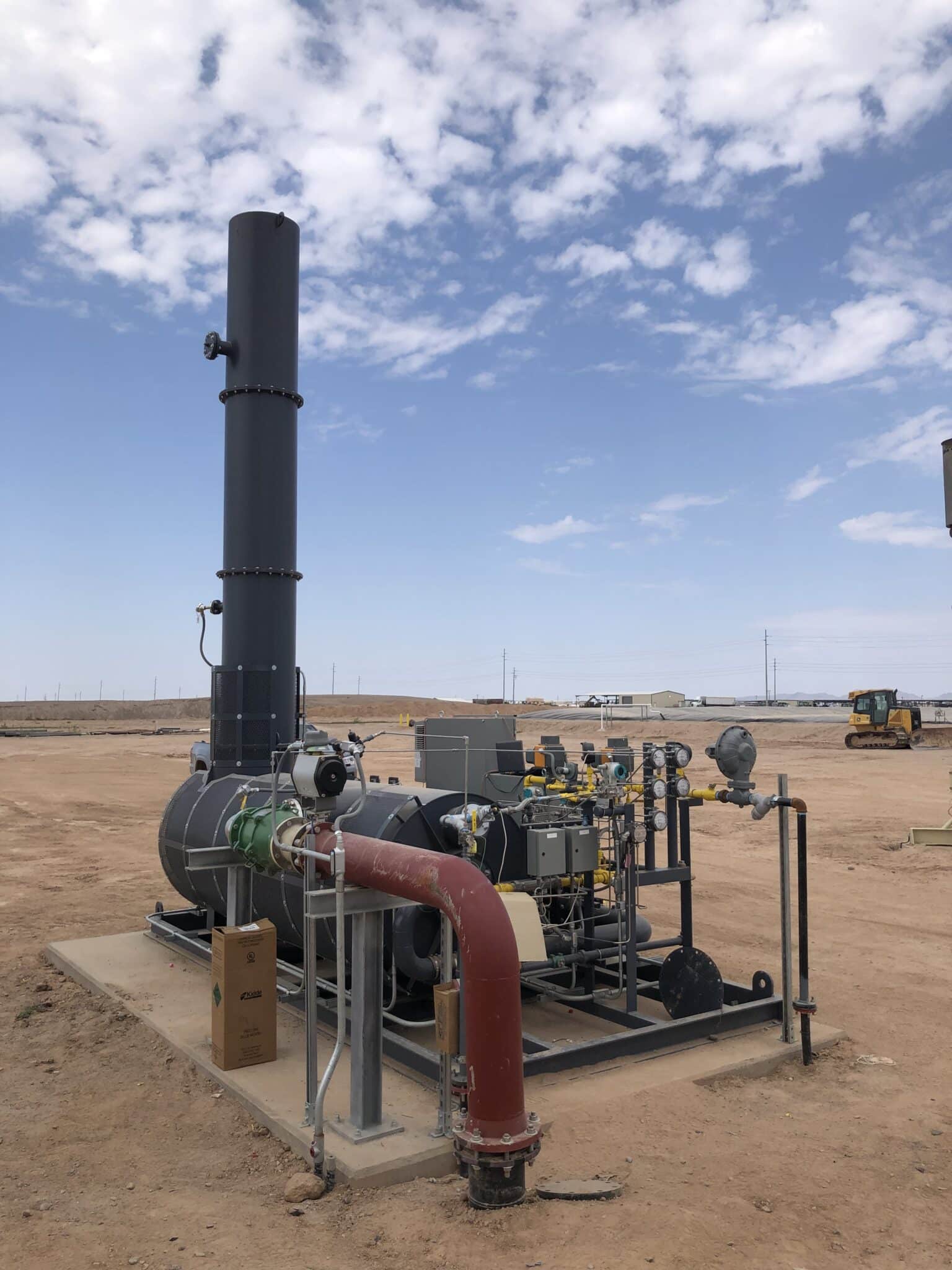
For facilities operating thermal oxidizers, combustion systems, or emissions-control equipment, heat recovery must be carefully integrated to preserve compliance performance, combustion stability, and operational reliability. A recovery system cannot compromise destruction efficiency, residence time, draft characteristics, or permitted emissions performance. Exhaust from regenerative thermal oxidizers and similar control equipment often carries recoverable heat, but the exchanger and recovery path must be engineered around the actual stream.
PCC approaches waste heat recovery as part of a fully integrated process and emissions-control solution. Since 1969, PCC has engineered combustion systems, thermal oxidizers, heat recovery equipment, and air pollution control technologies, including packaged combustion systems, for a wide range of industrial applications. The focus is on integrating heat recovery into the overall process while maintaining operational reliability and environmental compliance.
Request an Engineering Review from Process Combustion Corporation
Ultimately, the most successful waste heat recovery projects are those that align the heat source with a practical and sustainable facility energy requirement. Depending on the application, the appropriate solution may involve direct thermal recovery, ORC-based power generation, a hybrid recovery approach, or delaying implementation until operating conditions support a viable project.
A proper evaluation begins with accurate process data, including:
- Temperature profiles
- Flow rates
- Operating schedules
- Contaminant composition
- Pressure-drop limitations
- Utility demand requirements
- Existing emissions-control constraints
Only after these factors are fully understood can the appropriate recovery technology be selected and integrated successfully. To evaluate a specific exhaust stream, request an engineering consultation with PCC's combustion and heat recovery engineers, who can help determine whether a waste heat recovery boiler, an ORC system, or direct thermal recovery best fits the application.
Frequently Asked Questions
Ready to Discuss Your Application?
Contact PCC's engineering team to learn how our solutions can address your emission control requirements.