






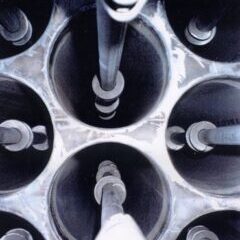
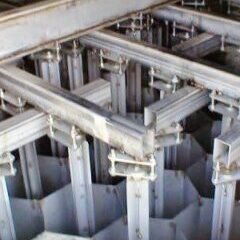
Wet electrostatic precipitators, or WESPs, use charged rods to create a field that pulls particulate from dirty flue gases to collection tubes that are continuously flushed with condensation.
WESPs have a unique design benefit of being able to grab the very fine particulates and mists from the airstream, which makes it an ideal polishing step in an air pollution control system.
The energy demand and pressure drops across WESPs are relatively low, which makes retrofits and add-on final control installations cost-effective.
Wet Electrostatic Precipitator Design Features
Tubular configuration
Allows self-irrigation without high water-flow rates
On-line cleaning
Allows continuous efficient operation
High secondary power levels
Produce increased collection efficiency for submicron particulate, heavy metals, and mist
Rigid discharge electrode with sharp emitting points
Results in intensified corona fields
Ease of incorporation
WESPs are easily incorporated into systems with pre-scrubbing equipment
PCC Advantages
Superior performance even with high concentrations of sub-micron particle loading
Operates effectively even with high current suppression
Very high-intensity corona
Low system energy requirements
Smooth internals
Lower water requirement
Rigid electrodes with precise alignment
Flexible downflow or upflow designs to suit the system arrangement
Low maintenance requirement
Applications
Heavy metal and salt fume removal from industrial and hazardous waste incinerators
Smoke and fume removal from industrial processes
Fine dust removal and organic pollutants
Acid mist removal from boilers and industrial processes
Satisfied Customer: Lenzing Fibers
Lenzing Fibers, located in Axis, Alabama, was investigating ways to lower the opacity of its exhaust system and increase recovery of solvent from its regenerated cellulose fiber (“Tencel”) production process. The performance of existing mist eliminators was not sufficient to adequately impact the very small particulate size.
AirPol was awarded a contract to supply and install a new Wet Electrostatic Precipitator (WESP) system that included inlet and outlet ductwork, control dampers, and a booster (exhaust) fan and exhaust stack, as well as a WESP Control Panel and instrumentation.
The turnkey project was completed using Lenzing’s preferred local contractors. The existing mist eliminators were removed and the new system easily provided the expected results. So much so that when Lenzing decided to re-start a second (idle) production line, another companion AirPol WESP system was purchased to ensure similar performance.
Need Information? Tell us your request.
"*" indicates required fields